

I’ve seen the future, I can’t afford it,
Tell you the truth, sir, someone just bought it
Say Mr. Whispers, here come the click of dice
Roulette and blackjack, build us a paradise
Larger than life and twice as ugly
If we have to live there, you’ll have to drug meMaybe these luxuries can only compensate
For all the cards you were dealt
At the hands of fate (so tell me)Tell me, tell me
How to be (how to be) a millionaire
Tell me, tell me
How to be (how to be) a millionaire
Millionaire, billionaire, trillionaire- How to be a Millionaire, ABC
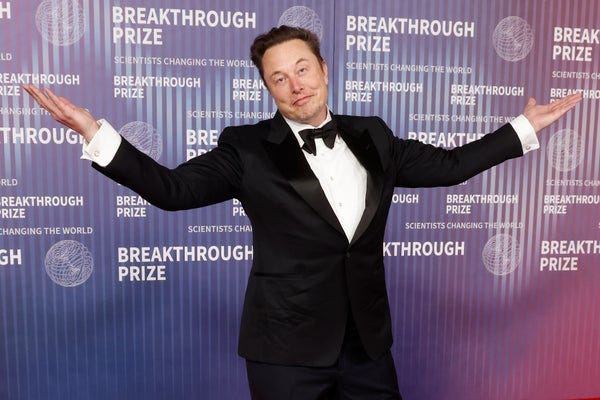
As I write this, Elon Musk has recently ticked over the line into the world’s first official trillionaire - which was largely expected - based on the success of the SpaceX IPO. This has caused great heartburn amongst certain politicians, who would love to gobble this up to fund various social graft for their own voters - and who yammer on that somehow Elon’s success is based on the failure of their own supporters to be able to survive without huge federal subsidies (for instance, food stamps/SNAP/EBT is now roughly $102 billion a year). Also, the US government pays out roughly $300 billion a year of disability payments - a somewhat difficult thing to qualify for, in many circumstances, but still an amazing number in aggregate. Naturally, the politicians dispensing this - and the beneficiaries thereof - do not want this disrupted; it’s much more attractive to stoke the fires of class warfare and blame the billionaires while spending $400 billion a year to buy votes and ship all the jobs to China.
But when we had the Great Depression, and an unprecedentedly-popular Democrat leader, there was a relatively legendary public works jobs program that ended the national unemployment crisis (and - most likely - the Great Depression globally) - the Works Project Administration invested greatly in America, putting millions of people back to work building American infrastructure.
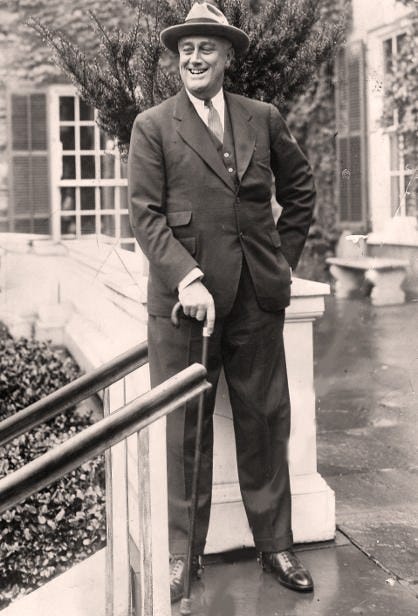
This was the beginning of decades of American infrastructure buildout - which would go on to include the development of the national highway system - but the WPA started with the construction of 650,000 miles of roads, 78,000 bridges, 4,000 schools, 130 hospitals, 350 airports, thousands of post offices, parks, and fire stations. It wasn’t just labor - there was a sizable arts initiative: 2,500 murals and 17,000 sculptures were created for public buildings, live theater and live music performances were sponsored for the edification (and community-building) of Americans, and the Federal Writer’s Project created guidebooks for each state. At a community level, literacy and scholastic programs fed more than a billion school lunches to students (keep in mind - this was coming out of the Great Depression, and was probably extremely welcome in many parts of the country) and was credited with tutoring bringing literacy to roughly a million and a half students. Basically all of this was done with the large scale unemployed population and a mass retraining program - mostly unskilled labor (and basic reskilling) - and was an amazing model for what might be termed a Basic Job Program.
The WPA was not without its critics - they deliberately went out of their way to employ the most people possible, so sought less efficient means of doing work (banning heavy machinery, insisting on hand tools and wheelbarrows, so as to require more laborers). It was ninety years ago; I suspect this would not go well today - but it did solve the problem of not having to train people on heavy machinery. Inevitably, there was the experience that WPA did not have the best workers and that they somewhat under-performed - leading to the jape that it stood for We Poke Along as the pace of the work was seemingly lackadaisical so as to continue to collect a paycheck as long as possible rather than to complete the work. And of course, there were at least a few WPA projects that were probably just boondoggles (things like “studying the history of the safety pin” always got some jeers or “teaching puppet-making” was … well, probably good for entertaining kids.) But it did generally serve the purpose of getting people back to work.

Now, there was of course a not-so-hidden reason there - this looked in practice a lot like the vote-buying efforts of today. At the time, you see, the Democrat voter base was not nearly so reliant on government handouts. It was extremely focused on unions, and unions required employees. If those employees happened to be government employees, and this was a de facto government handout - well, at least we were getting better roads, bridges, airports, schools, parks, hospitals, and labor for school lunches and labor for things like school lunches or public entertainment - rather than just getting a lot of fentanyl zombies lying about in the streets.
How did this go wrong?
Well, the vote-buying became too obvious - WPA officials threatened to fire people who didn’t vote Democrat or didn’t donate to Democrat politicians. The Federal Theater Commission and Federal Writers Project became a hotbed for Communist infiltration, as might be expected during the 1930s, and ended up employing the sorts of people who drew the attention of the House Un-American Activities Committee (HUAC) - leading to it being entirely defunded in 1939.
Ultimately, the WPA became unnecessary because a much larger public full employment program replaced it - the move to national mobilization during the Second World War. And afterwards, the economy had re-stabilized, and WPA as mass-employment didn’t need to return - a nationwide effort to build interstate highways filled similar purpose, but not quite under the same bailiwick.
After the Second World War, the American economy was a juggernaut. There was a somewhat straightforward reason for this: a lot of the rest of the world had been bombed flat, lost millions and millions of people during the war, or at least was greatly depleted of resources and wealth due to the expense of the the last few years of global war. Tax policy was set “such that the rebuilding of society would not overly enrich the industrialists” - tax rates were extremely high, peaking at 91% of income - and as you’d expect, all the wealth that was generated in America went to rebuild the rest of the Western world … or basically anywhere else, because having the government take nine out of every ten dollars you made basically ensured that trying to keep it was not going to work.
Now this is where the folks like Bernie Sanders and Alexandria Ocasio-Cortez (who you may often see acronymed as AOC) come up with the idea that “really high tax rates will lead to a very productive economy for most people” - when what you in fact get “it just hasn’t killed the economy yet.” Let me explain the historical situation first, and then let me come back to more of an explanation of why this would not work out well today.
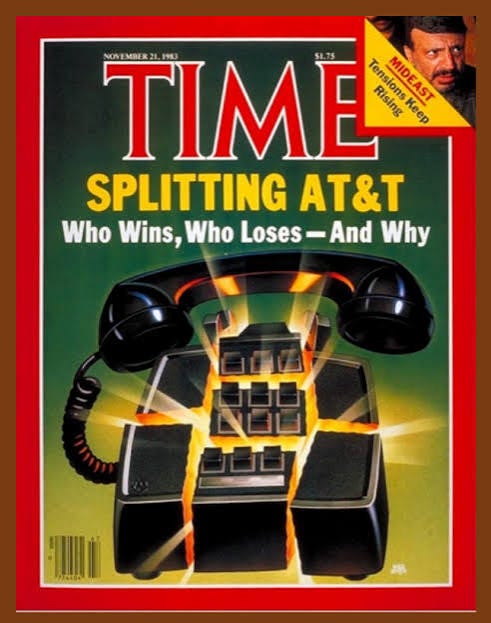
So there was some problematic fallout from this. Corporations grew really big and monolithically powerful: AT&T and IBM were bigger than the US Army, for instance. (In case it isn’t obvious - the reason is because “reinvesting in the company was the obvious choice, since paying out dividends to shareholders would basically involve losing 91% of value” - so building megacorporations was the order of the day.) And of course the major oil companies were absolute behemoths. Until a problem arose.
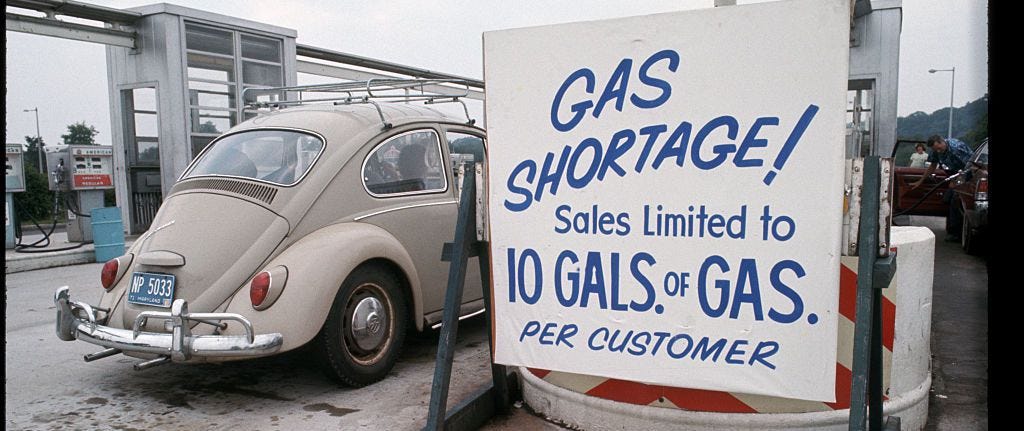
Decolonization, in the name of supporting democracy and resisting Communism, and subsequent nationalization of assets, in the idealistic name of giving these newly freed nations their economic sovereignty (or perhaps more clearly not objecting to them taking it) suddenly saw a lot of the profitable bits of the system being pulled away by local governments for their own purposes. This would spur various crises - the Suez Canal crisis when Egypt nationalized the canal, the Iranian nationalization of British Petroleum, the Algerian war of independence significantly over control of its oil fields, various Argentine nationalizations over the years including an ineffective Falklands grab, the Chavez nationalization of Venezuelan oil, Occidental Petroleum in Libya, and depending on how you’d like to view it possibly also the partition of India/Pakistan. Saudi Aramco might or might not be the exception to this rule, being a gradual buyout - but the OPEC crisis turned out to be a global drag on the world throughout the 1970s and into the early 80s, enriching the oil sheiks and impoverishing the rest of society. All of these were deemed secondary to the Cold War - and were basically the de facto economic battlefield of the Cold War; fought by proxy in the Third World nations, sometimes in open warfare and sometimes by political maneuvering and bribery. The CIA was sent to intervene - because it was rarely opportune to actually deploy the US military; the Korean War and the Vietnam War had convinced the American public that this wasn’t going to go well.
And to be fair, it mostly wasn’t the way Americans were good at winning wars. For all that Americans like to think of themselves as having arrived in Europe twice and rescued both World Wars - it turns out that the American Army in the Second World War mostly did really well in artillery and air power, and mostly got shot to hell by the Germans; even despite an outrageous advantage in numbers, logistics, bombers, and artillery, the Wehrmacht forces killed 1.7 Americans for every German soldier (and did better against nearly everyone else - good lord, the Soviets really took it in the teeth.) Americans mostly won battles by logistical superiority, air power, artillery… and naval superiority. This was harder to bring to bear in Korea or Vietnam, with no great naval battles to be won, at a very long end of a logistical supply chain … and without someone else to supply a great number of soldiers willing to do much of the ground fighting in our place, as the Soviet Union had done during the Second World War against Germany or China had done to tie up the Japanese army in Asia. There was always the recurring proposal to win things the way the Second World War had been won: MacArthur wanted to use nuclear weapons in Korea, and Nixon kept considering nuclear escalation in Vietnam. Thus far we haven’t done that (though inevitably, it sounds like our AI models keep telling us to do so… perhaps we can’t rule it out.) There’s the premise that we won in Iraq through technological advantage as well, which may well be the case, or others would claim it was a carefully applied OODA loop enabling “shock and awe” strategies (which… I’m not enough of a military historian to really validate this one, so I’ll leave it to the experts; the “thunder run” and “blitzkrieg” look similar to me apart from scale and “act faster than your enemy can react” seems historically well-known strategy even by Sun Tzu standards.) So the short version of the story is - we tried not to go to war at large scale, especially because the Vietnam war convinced America that we weren’t going to do very well at it, and we still needed to mostly be available to defend Europe in case the Red Army decided to come crush Western Europe. (The only other apparent option back in the late Cold War days appeared to be escalating quickly to tactical nuclear weapons if the Warsaw Pack crossed the Fulda Gap, and that looked like a strategy that was going to set the world on fire.)

So - I said earlier that AOC and Bernie were wrong about confiscatory tax rates being the way to boost the economy. (I’ve said they were wrong about a lot of things, but let’s stay with this one for the moment.) In the immediate post World War Two era, taxes on the wealthy were very high - income taxes topped out at 91% which really gave everyone who had big money every incentive to do something else with it other than just earn it.
At the time there was nothing else comparably productive to do with it - and money wasn’t nearly as readily moved about. But the prospect of moving your money to a comparable investment in China, or Dubai, or even London or Paris wasn’t there - the European cities were recovering from the war, Dubai wouldn’t be built for decades, and China was having a nasty civil war that would end up with the Communists in charge and Chang Kai-shek exiled to Taiwan. Switzerland would (famously or infamously) emerge as a place to hide your money, for a while - but you couldn’t nearly as much make money there as you could simply stash money there. So there was a lot of … speculative and relatively dangerous, or at least “less safe” investments internationally - ones that might make you a very solid and less highly taxed return, or might lose you everything - and then of course, if you happen to have made a lot of money internationally, then people started coming up with various sketchy plans to keep more of it. (Your proverbial Swiss bank account might in fact feature prominently here for many people, for many decades, or of course if you were truly powerful and had a multinational corporation as an ally they might very well handle that sort of thing for you through various import-export relationships.) But all of these options were fraught with danger and were not straightforward to navigate; you might be better off with your money still overseas and outside the reach of Uncle Sam.

You didn’t particularly want to just put it in the bank and save it either. Income taxes would eat all your interest earnings (on conventional savings, or certificates of deposit, or bonds) - so Americans developed a culture of mostly not directly saving their money, as compared to other nations around the world, who find this inexplicable. Again, you’ll find that mostly this was driven by government incentives, where absurd tax rates combined with inflation basically meant that “saving for the future basically meant that trying to save your money was a fools game” - never mind that whenever anyone started actually building up any sizable amount of cash-on-hand wealth, it was an invitation for robbery of either the criminal sort or the taxation sort. So the American way to build wealth was rarely to build empires of cash; the Rothschild lending empires were not the model that America would follow.
Americans would instead be entrepreneurial. And this is when I finally get to the point of this article. Fortunes have been made in this nation in a variety of ways, but truly immense fortunes - a rather smaller number of ways.
They mostly boil down to a fairly simple precept. You must make something that a great number of people want. Now a lot of panicky politicians (who are, of course, trying to sell you on their dogma) and left-wing types who just recite the talking points (but simply don’t know any better) claim that this is only done by stealing value from others and exploiting them; that you can’t get wealthy without being evil. Some may point to the Bible for justification (probably not these days, it seems to be passe, but the traditional line from a preacher who wants to demonize the rich is Matthew 19:24 - “it is easier for a camel to pass through the eye of a needle than for a rich man to enter the kingdom of God”.) And people do love to tell folks to hate others - come join us in Tortuga’s book club and talk about Alinsky’s Rules for Radicals here in a couple weeks, you’ll get an earful.
It’s easy to envy these gents (and, increasingly, ladies). But do you hate them? In the days when celebrity billionaires have been minted by their sheer popularity and the fact that they’ve made works that appeal to so many, are we sure that Dwayne “the Rock” Johnson, or Oprah, or Taylor Swift, or Steven Spielberg, or George Lucas are all evil? (Ok, wait… I just remembered Jar-Jar, and… ok, never mind, I’m convinced about Lucas.) Peter Jackson? Bruce Springsteen? Jerry Seinfield? James Cameron? Arnold Schwartzenegger? Beyonce? Rhianna? possibly Ryan Reynolds, Tom Cruise, Jackie Chan, or George Clooney, all of whom might or might not be past the three-comma mark? (If you said “Clooney or Cruise must have sold their souls to the devil to be that good looking and unaging”, well… maybe. Maybe it’s excellent genetics and personal trainers and a fantastic workout program. Maybe it’s plastic surgery. Maybe it’s Maybelline.)
Plenty of the wealthy folks out there have sharp elbows in the building of their various business empires, and this is most notable at the top - Gates and Zuckerberg have been noted for not only building world-spanning dominance with Windows and Facebook, crushing rivals as they did so, (and having to fight off endless monopoly investigations) but for becoming astronomically wealthy along the way.

But others have basically had the good fortune to build something tremendously successful and exit earlier. For instance, when Facebook bought WhatsApp in 2014 - for more than $21 billion dollars - it had only 70 employees; they all did rather fantastically well (especially their founders, and of course their investors). The two founders of WhatsApp together made about $11 billion from this deal, and fundamentally did so without being evil. Most employees apparently made about $40 million; some about $160 million (if they’d been there for several years) and of course over the four-year-vesting-cycle they may have been otherwise waiting for their shares to vest, Facebook stock spiked further. As my uncle would have said, “that’d even pay off my bar tab.” There might be a quiet billionaire or two there also from the ones who vested quietly at Facebook-nee-Meta and then left the insanity behind.
Likewise, back in the very dawn of the web (1995-96), Craig Newmark rather quietly built an absolute powerhouse of a website that made him a billionaire - you probably don’t recognize his name, and the website looks extremely dated despite the fact that it still completely mints money - but you likely know the site, it’s called Craiglist. He absolutely could have made buckets more money than he did with it, but realized fairly early on that he had more than enough for anything he’d ever want to do - and also left the Silicon Valley Arms Race; he’s been focused on philanthropy ever since (and famously - doesn’t own a car, and flies commercial everywhere he goes.) Met him at one point; he was doing photography and videography of local startup communities as part of a documentary - and happily taking all the photos himself; very grounded person. You know: good for him; it’s far too easy to be obsessed by trying to climb to yet greater heights, and I rather have to respect the decision that says: nah, I’m a billionaire, I’ve won the game of capitalism, I’m going to go do everything else I ever enjoy now (including a great deal of philanthropy - as this link notes, he’s given away more than half a billion dollars) because I can’t possibly spend all this. There are a lot of people who seem to not learn when they’ve won and when to stop.

But this all comes down to a very simple lesson. Make something awesome that makes your customers happy - and pick a field where you can have many customers. If you build something great, people will tell their friends (and you can do various things that will make this easier, to help your growth). There’s of course key metrics that influence this - cost of customer acquisition (how much does it cost you to get a new customer), retention and churn (how long does a customer stay with you), average revenue per user (how much are they spending while they’re with you) and what the margins are like (it’s not long term good to be selling dollar bills for eighty cents each, like mythically happened back in the dot com gold rush but was sort of the heavily subsidized ride sharing model growth model for Uber - it can help you grab market share and displace current competitors though… and it might be illegal, the practice at scale is sometimes called “dumping”). There’s various things you’ll want to know from a sophisticated perspective to discuss broadening your market opportunity long term - but the simple “they love it” elevator pitch is very compelling.
This leads to a fairly critical equation for entrepreneurs:
Your customer base and your growth rate (and of course, your total addressable market) determines how successful you can be overall with a given offering. Nothing stops you from expanding your offering, of course; repeat customers are a great example - if you bought Taylor Swift’s last album, you are reasonably likely to buy her next one, or might buy concert tickets and t-shirts - but the simplest portion of this is how many customers you have. The most important part of the equation here is getting more Swifties to hear and fall in love with your music.
Usually this is more applied to how to build your social media startup or whatever, but the equation is the same: customer base multiplied by time multiplied by growth rate.
Naturally, a higher growth rate - say, a startup growing at 20% a month - is going to multiply in value very quickly; this is the law of compound interest.
Let’s say you’ve got a little firm making … goodness, how about a new video game, something you are pouring your heart into in order to make the next Minecraft. (Heaven knows it paid off for Notch, though I don’t think he actually did it with an eye towards a huge payday… he sure got one.) You’ve gotten some initial success, some first buzz, and after a flurry of installs you’re making about $10,000 a month, and growing at about 20% a month. Well, you probably were making more before you left Microsoft, but hey once this grows for a couple months maybe you’ll be back to even, right? Long term, maybe this will work out for you?

A lot faster than you think. If you can keep that going for four years, it’ll make you a billionaire - even if you need to take investors along the way, and you almost undoubtedly will because this is rapidly going to outgrow what you can do by yourself or with a small team, but let’s say you end up owning a third of the company in four years? That’d put the company at roughly $63 million a month (or what’s called an annualized run rate of about $760 million - which is of course, just the most recent monthly rate multiplied by 12). In an acquisition scenario, a software gaming company is often valued at about 5-10 times earnings - tending towards the lower side if it’s a single-product company - but let’s call it six times, and estimate the company at being worth about $4.6 billion. In a sale, you’d probably net about a billion and a half; your employees and team might also share out someplace between half a billion and a billion - you’d likely mint at least several dozen new millionaires amongst your crew, and the investors also likely go home very happy with their returns (roughly speaking, the other half of the company will by this point be owned by investors given that you will need to have spent a bunch of money to grow that quickly, and they’ll have some level of relatively fabulous return depending on how early they got in). Did you have to do anything particularly evil or terrible, or did you mostly make awesome things to entertain people? I know there are people who dislike or mostly envy Notch - and like any vaguely socially unkempt dude, he has some opinions that probably make him look bad when dragged out into the light out of context - but in general I think we can all agree that at least he built a very successful Lego Sandbox World Game that continues to have zillions of players today. And from my understanding, he is perhaps one of the classic stories of “becoming wealthy doesn’t make you happy” - the number of people who might want to trade places with Notch the Famous Creator of Minecraft and head of the that community versus Notch the Retired Wealthy Hermit who seems to be waking up looking for meaning… well, I realize it may be hard to find sympathy for that class of problem, but it can be a little alienating. There’s a reason Marvel’s iconic hero Tony Stark cleverly identified his identity as Genius Billionaire Playboy Philanthropist, after all.

There are worse things to aspire to.
It saddens me to say that there was a day that Bernie Sanders seemed to understand this sort of thing - that he legitimately focused on protecting American jobs and American workers (even if primarily focused on unions, because unions could be relied to Vote For Sanders), and that though he was not fond of the wealthy he understood that employers were necessary. But after his populist appeal to fix the economy was derailed by the activist black bigot faction of the progressivist movement, at the direction of Hillary’s machine politics engine, Sanders seems to have bowed his head, took a fat paycheck (and acquired several very nice houses), and fallen into line with the party establishment. But it is hard to match the power of whoever the DNC anoints. (Of course, one would have said the same thing about the RNC, and Trump was definitely a dark horse candidate that subverted that power structure and displaced decades of previous leadership, to the shock of many traditional Republicans, so it’s not like this sort of thing can’t be done when the leadership gets sclerotic - and heaven knows the DNC is due for a shakeup too. I expect Sanders is, at this point, too old, too single-issue, and too unphotogenic to be the new Kennedy though.)
It seems there’s a flickering of understanding with the “abundance movement” - that there is a realization that the nation needs economic growth and prosperity to succeed. (But fundamentally not the understanding that the thing holding it back is over-regulation and political disincentives that instead drive industry offshore: it’s not that we couldn’t build things effectively here in the US, it’s that there’s an enormous government regulatory industry specifically getting in the way that makes it a better choice to instead build in China or a handful of other nations. We are in this respect our own worst enemy.) As a nation we should want to be successful, prosperous, and sustainable - with employment, education, and a better tomorrow for all. We should not fear wealth; it should be the goal to raise everyone to success and wealth. That million dollar house? Should be four year’s wages. And if we hadn’t screwed up the economy with over-regulation which in turn led to corresponding offshoring of entire industries, that’s where we’d be today.
A great education !