

And I find it kind of funny
I find it kind of sad
The dreams in which I'm dying are the best I've ever had
I find it hard to tell you, I find it hard to take
When people run in circles, it's a very very
Mad world
-Mad World, Demi Lovato and/or Tears For Fears
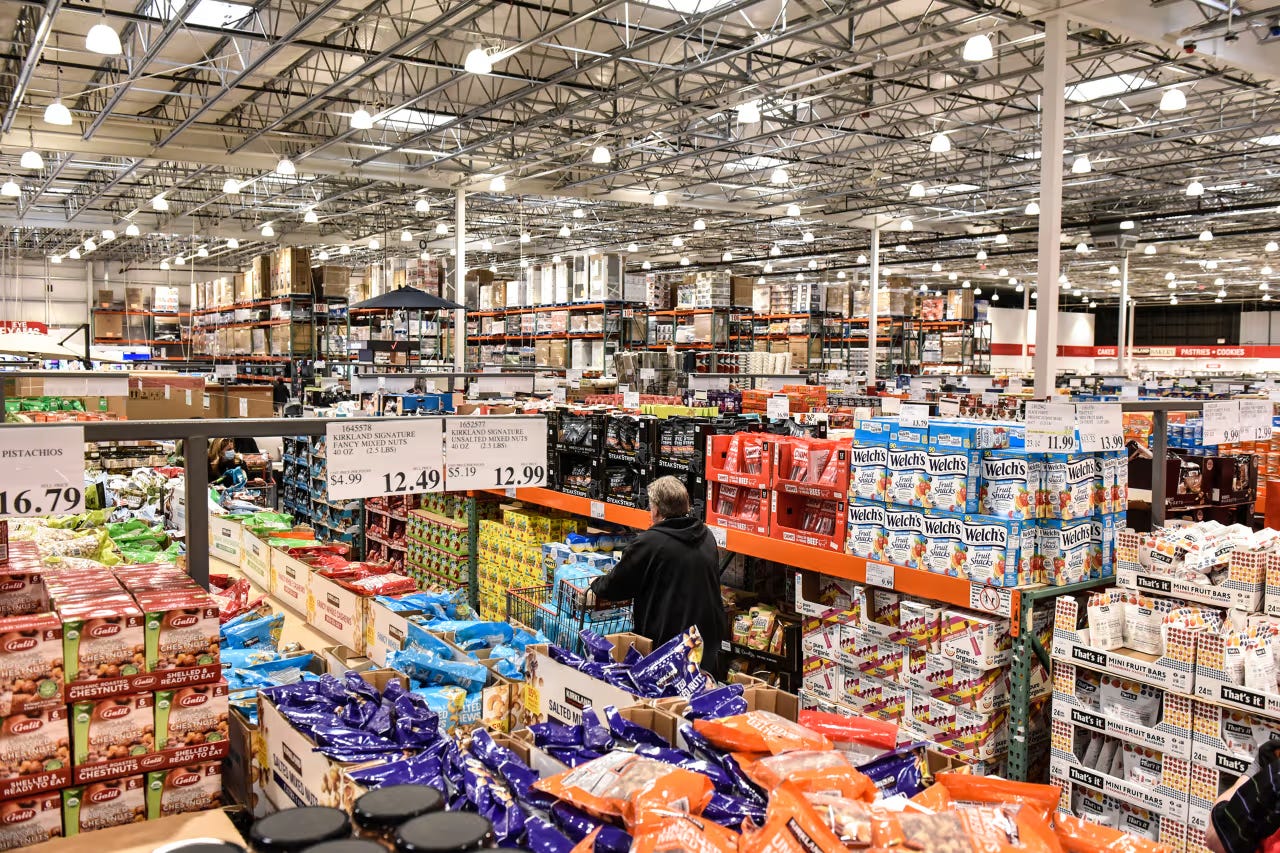
Costco is a membership club - a warehouse store wherein you pay a fee for the privilege of being able to buy rather large lots of food or other common household goods (vitamins, toilet paper / paper towels / diapers / all the other sort of disposables that families go through) … and also, discounted products in common categories like televisions or mattresses or furniture. Rather stereotypically, it’s a store for families or small businesses - and not much use to individuals (it’s hard to go through a dozen muffins or a triple-sized pumpkin pie by yourself, unless you mostly just take it to the office and share with coworkers.)
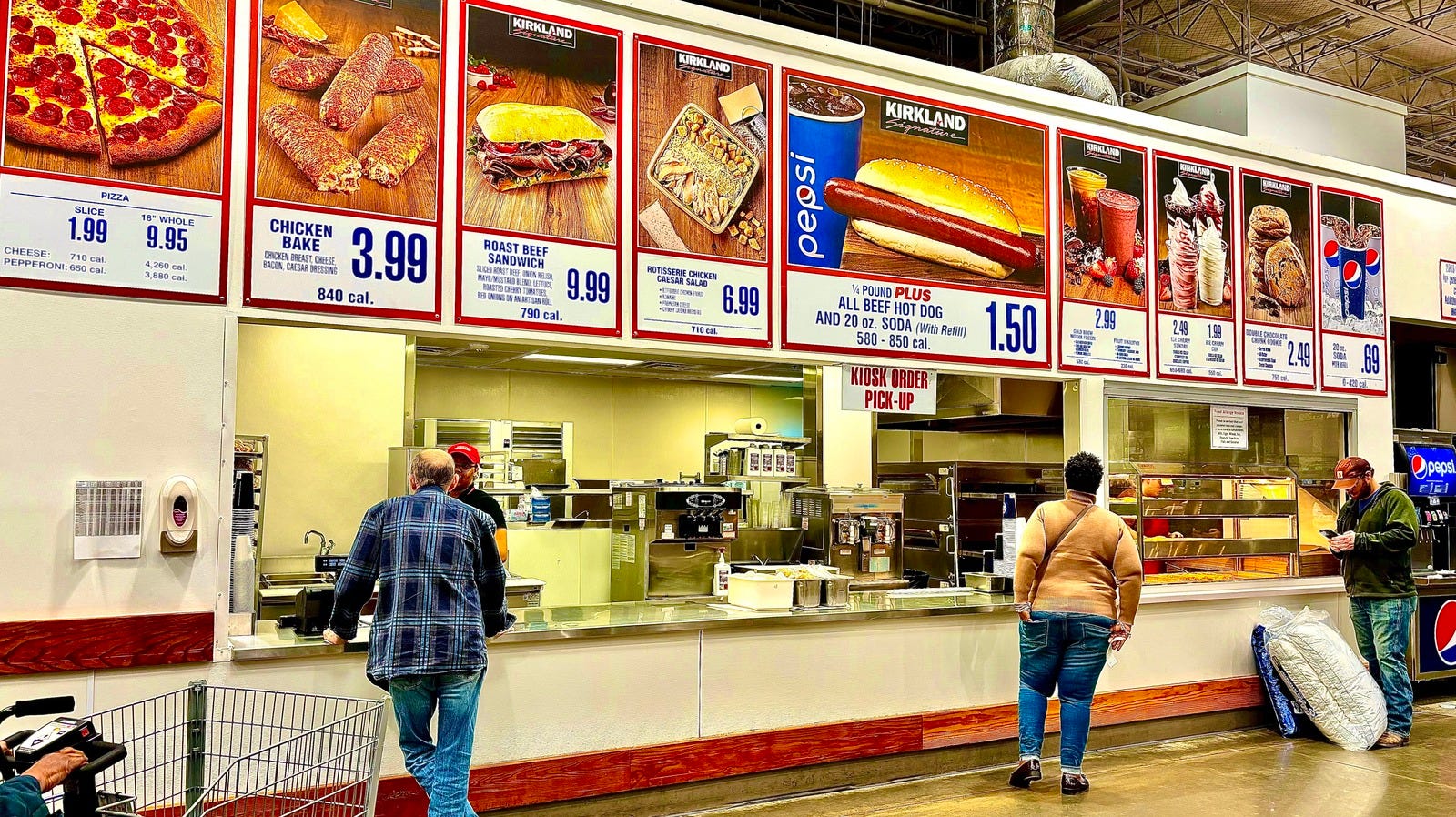
The running joke is that their secret weapon is their food court and the buck-and-a-half hot dogs. Well ok, fair enough - this is funny, and they are a remarkably good value, for however much you can stomach hot dogs (again, this may appeal more to families with kids who are into that sort of cuisine). But that is not actually the answer.
My son thought about this and gave a reasonably correct answer. People spend money on their memberships, so they shop there regularly to recoup the membership fees (with savings and rebates). That’s correct - but that’s not a secret.
Costco has a much more interesting advantage over other retailers.
It has very low “shrinkage” compared to other stores selling products to the public. Shrinkage is an euphemism meaning loss of value due to wastage or theft - some of it is food that spoils or the like, but almost always what it means is “shoplifting and other categories of theft” such as return fraud.
Costco has this advantage for two significant reasons. If you’ve ever shopped there, you know they check your shopping cart on the way out against your receipt - but this is at least theoretically not to deter shoplifting, it is to ensure that their customers have made some unfortunate error in the food court or at checkout and left some product behind at the cashier. This apparently happens modestly often - and it’s probably fairly plausible that shoplifting is not generally a huge concern for Costco given the fact that they mostly sell enormous packages of bulk materials, are you likely to try and stuff three gallons of pickles up your sleeve and gracefully slip out the door? For those who say but hey, wait, it’s the high value density items like iPhones and gift certificates that are the easily pocketed items - yes, you’re right, but those are ones where you take a slip to the cashier, present it at checkout, and a runner fetches it from a locked cage and gives it to you when you’re there at the cash register.
But there’s a second, much more obvious reason that Costco has a distinct advantage against shoplifters as a membership club. You have to show a membership card to get into the store, a membership card that you had to buy in the first place, that has your identity picture on it and which is scanned every time you go in and verified by admissions personnel. If you don’t have that - or if it’s expired - or if you show a card that isn’t you - you aren’t going in today. at least not without buying a new membership. And that keeps out the riff-raff and it turns out - makes it much harder to steal something. (This wasn’t actually intended as a parable for voting, but feel free to draw that comparison if you like.) Well, as many many retailers have learned, there’s a lot of people who will happily wander in off the street, steal whatever they can, and rely on either not getting caught or on the newly lax laws across many parts of America to not be prosecuted. California has led this to new levels of absurdity in recent years, as they tend to do, effectively decriminalizing shoplifting under $950, and when combined with a “social justice” movement to defund police and not prosecute “the underprivileged” … a term used by prosecutors as shorthand for homeless or minorities … why, this became a license to steal. Understandably, this did bad things for the viability of department stores, electronics vendors, big box retailers, liquor stores, grocery supermarkets, drugstores, and most of Costco’s other competitors. But because Costco was a membership store, they were allowed to screen people before entering and only let their members in, so rather than allow the public to enter, they could require an active membership identity card to enter and likewise require inspection of your cart when you leave. Not to put too fine a point on it, this kept out a lot of criminals.
Now most retailers cannot do this. Walmart cannot say “we don’t like the look of this guy, he can’t come in” without risking a civil rights suit. Stores like to put up signs saying “we reserve the right to refuse service to anyone” - but that is meaningless these days, you will be sued out of existence if someone wants to make an example of you. The example everyone is probably familiar with is Masterpiece Cakeshop v. Colorado Civil Rights Commission - which basically came down with the ruling that if you make wedding cakes, you can be forced to make one for a couple that you don’t otherwise want to serve (because you aren’t allowed to object to their marriage being gay). I am not sufficiently versed in the details of the law here, but somehow it doesn’t seem like wedding cakes are a public utility or otherwise an obligation that a given baker would be compelled to provide - or at worst something that isn’t fungible enough that you couldn’t just go to the next baker down the street and get one - but I suspect this was an instance chosen to “make an example of” Masterpiece Cakeshop. “I insist you must do this thing for me” seems like the response should be “I do not think I want to do business with you” and it seems unreasonable that the bakery should be compelled to provide it; to be fair, I would probably feel differently if this were instead a matter of lifesaving medical care or something similar where turning someone away is more than just a matter of negotiation. But as it stands - it’s very problematic to keep someone out of your store unless you have them on camera previously stealing from your store or they have a track record of passing bad checks there or the like. Even if they they have police warrants out, you can perhaps quietly call the police and have them apprehended.
This isn’t something easily fixed for other retailers, because it requires either their business model to change - becoming a membership store instead of a general-purpose retailer is, for most stores, a rather phenomenal shift - or for laws to change. And really, it’s less for laws to change, precisely, but for law enforcement to actually resume: it’s theoretically still illegal to steal, it’s just effectively decriminalized because it’s been rendered a misdemeanor that the police won’t arrest people for, because prosecutors won’t bother to charge perpetrators for. But look, now the statistics say crime is going down, don’t you feel safer? Don’t trust your lying eyes, the Ministry of Truth says you are safer regardless of the obvious junkies on the streets and criminal behavior in plain view - you see, if we decriminalize more offenses, or don’t bother to arrest or prosecute, the reported rate of crime goes down even if the world becomes less safe. It’s all a matter of managing to what gets measured, and the world is driven by its incentives a lot more than by feel-good vibes.

Interestingly, Costco can also get away with being politically quite progressive - they’ve taken a strong stance in support of their existing DEI policies (and they tend to have a customer/member base of affluent urban/suburban bourgeois bohemian clientele, skewing towards the major metropolitan demographic that comprises “blue cities”). Some customers value this, others just value the prices/product selection.
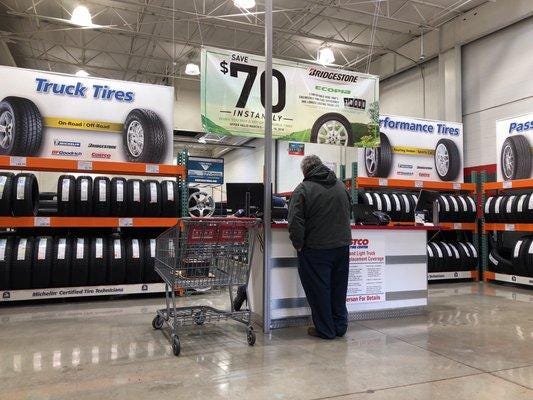
Costco customers are predominantly middle-to-high-income, suburban, and college-educated, with a significant base of Gen X and Baby Boomer households. While often characterized as suburban families, the customer base is increasingly shifting toward younger Millennials and Gen Z, with Asian American households showing high participation rates. 72% of Costco shoppers are female - this may sounds startlingly high at first glance, but this is true of shoppers in general outside of certain niches (Home Depot, Cabelas, etc) and Costco bends towards significant fraction of its audience’s (reasonably significant) income - as you might expect, to take advantage of bulk-buying capacity. There’s a lot of Costco offshoot business as well … travel, appliances, jewelry, phones, furniture, automotive sales, gas station, pharmacy, insurance, home improvement services, tires - (this one, in fact, took me to Costco today) - and a prominent business service division as well. It’s a fairly vibrant ecosystem.
And the rebates (and the excellent return policy) keep you coming back, too. But when it comes down to it, their advantage over Bentonville is that Wal-Mart has many more stores, many more product SKUs and thus a large inventory management problem yielding correspondingly lower margins, lower revenue per store - which sometimes gets pointedly called “lower employee productivity” and that’s definitely a spreadsheet-brained view of it but also not entirely wrong… and while Wal-Mart has more absolute dollar volume purchasing power, Costco has a bit of extra margin from membership fees (which they use to subsidize lower prices on a per-unit basis for products in store) so it tends to be awfully close. And of course also Costco has their secret weapon: membership access to reduce crime, which is effectively an invisible subsidy since Walmart has to otherwise absorb that “friction” cost. (One might reasonably ask: at what point is it “worth it” for businesses and insurance companies to lobby for law enforcement to protect property rights again? That is, I’m afraid, a rather lengthy discussion - perhaps we’ll take it up another day.)
The U.S. Supreme Court did end up ruling for the baker’s right to not bake the gay cake (after CO totally screwed him all the way). But then a trans lawyer immediately embroiled him in another lawsuit over a trans cake. I think that eventually resulted in the baker’s favor but sheesh 10+ years of litigation over 2 cakes is pretty insane huh.
Great piece but you missed a fairly significant component - Costco enforces very strict QC controls on their white label suppliers in a way WalMart can't or won't. So beyond just convenience and cleanliness, people tend to have brand loyalty to the Kirkland products themselves. Have you ever seen an Instagram channel dedicated to the latest bag of Great Value frozen veggies? Me neither. But Costco adherents wear their Kirkland swag proudly and unironically