

You can look to the left and look to the right
But you will live in danger tonight
When the enemy comes, he will never be heard
He’ll blow your mind and not say a wordBlinding lights, flashing colours
Sleepless nights
If the man with the power
Can’t keep it under controlSome heads are gonna roll
- Some Heads Are Gonna Roll, Judas Priest
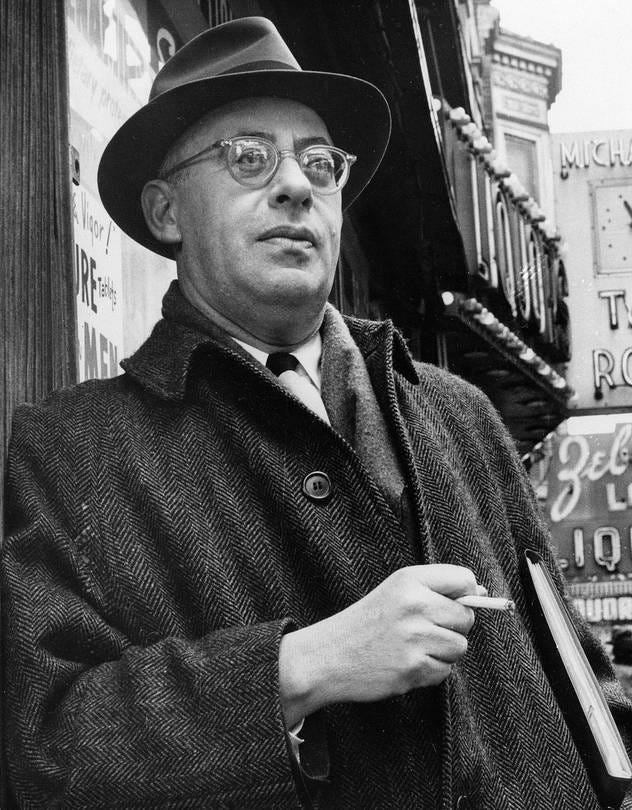
Saul Alinsky wrote Rules For Radicals to teach the leftists how to organize a revolution - primarily for the inner cities. It was the capstone work of his life - he’d been doing it for decades… and he was good at agitating, and not necessarily at actually getting things to change. But he did manage to draw a lot of eyes to his issues, so that was attractive to certain people who decided to follow this instruction manual - and it’s useful to know what’s taught herein.
Most of you haven’t read this. There were some very open minded folks around when I was young. Some of them thought I would enjoy this or maybe eventually be a good convert or whatever, I don’t know. I read it - I was probably ten, it was already pretty obsolete, Alinsky was already dead - said huh, and went back to reading more interesting things. But that didn’t stop it from being the guidebook for certain community organizers and the formative gospel of a lot of the Left. It was funny to be handed it again when I went to university as if it was some sort of secret tome of forbidden knowledge (you know, like the Anarchist’s Cookbook or Ted Kaczynski’s manifesto, both of which were also circulating with a wink and a nod from the staff who lovingly remembered their flower-children days.) So let me summarize the salient points here.
Wikipedia or ChatGPT or whatever will tend to give you a summary of just some actionable stuff, but it opens with some laws of morality that Alinsky is trying to define and use to justify behavior and use to shape moral interpretation.
He calls these “rules pertaining to the ethics of means and ends” (and yes, he really does write like this - it’s a wonder he thinks any of his intended revolutionaries are going to read it. Keeping in mind of course - he doesn’t intend the foot soldiers to read it - just the would-be organizers.)
Alinsky spends a lot of words, which I’ll summarize and/or quote here, to marshal justifications around a particular point - but this whole section comes down to a fairly simple premise:
That perennial question, “Does the end justify the means?” is meaningless as it stands; the real and only question regarding the ethics of means and ends is, and always has been, “Does this particular end justify this particular means?”
And Alinsky’s premise is: Of course it does; seizing power justifies any means.
I present here his series of rules pertaining to the ethics of means and ends, along with a quick digest of each:
First, that one’s concern with the ethics of means and ends varies inversely with one’s personal interest in the issue. When we are not directly concerned our morality overflows; as La Rochefoucauld put it, “We all have strength enough to endure the misfortunes of others.” Accompanying this rule is the parallel one that one’s concern with the ethics of means and ends varies inversely with one’s distance from the scene of conflict.
A straightforward enough premise: the more you care about the outcome, the less you care about how the means used to get it (and likewise, you don’t tend to care as much if it’s happening Way Over There, so that frees you up to pontificate more rather than actually taking a stand - the classic Keyboard Warrior perspective.)
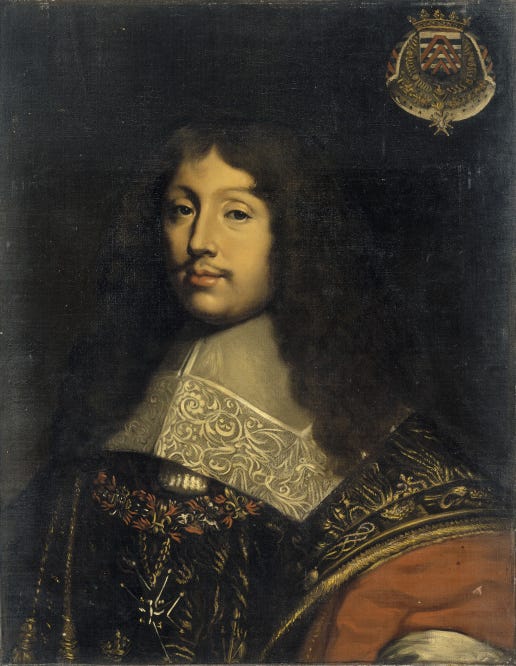
You’ll note that Alinsky cites many famous thinkers out of context herein, as if to say La Rochefoucauld or Lincoln or Gandhi are all endorsing his line of thought. Clever, but questionable - this is more the stopped clock being right twice a day (and Alinsky, to be fair, is not particularly dumb: he is kind of abrasive and not particularly successful in his own era, but one can attribute that to other factors.)
The second rule of the ethics of means and ends is that the judgment of the ethics of means is dependent upon the political position of those sitting in judgment. If you actively opposed the Nazi occupation and joined the underground Resistance, then you adopted the means of assassination, terror, property destruction, the bombing of tunnels and trains, kidnapping, and the willingness to sacrifice innocent hostages to the end of defeating the Nazis. Those who opposed the Nazi conquerors regarded the Resistance as a secret army of selfless, patriotic idealists, courageous beyond expectation and willing to sacrifice their lives to their moral convictions. To the occupation authorities, however, these people were lawless terrorists, murderers, saboteurs, assassins, who believed that the end justified the means, and were utterly unethical according to the mystical rules of war. Any foreign occupation would so ethically judge its opposition. However, in such conflict, neither protagonist is concerned with any value except victory. It is life or death.
History is made up of “moral” judgments based on politics. As allies of the Soviets in World War II we praised and cheered communist guerrilla tactics when the Russians used them against the Nazis during the Nazi invasion of the Soviet Union; we denounce the same tactics when they are used by communist forces in different parts of the world against us. The opposition’s means, used against us, are always immoral and our means are always ethical and rooted in the highest of human values.
Whether history records you as a hero or a villain depends on who is telling the story. Both sides have their bad hombres. This is news to no one.
The third rule of the ethics of means and ends is that in war the end justifies almost any means. Agreements on the Geneva rules on treatment of prisoners or use of nuclear weapons are observed only because the enemy or his potential allies may retaliate.
Winston Churchill’s remarks to his private secretary a few hours before the Nazis invaded the Soviet Union graphically pointed out the politics of means and ends in war. Informed of the imminent turn of events, the secretary inquired how Churchill, the leading British anticommunist, could reconcile himself to being on the same side as the Soviets. Would not Churchill find it embarrassing and difficult to ask his government to support the communists? Churchill’s reply was clear and unequivocal: “Not at all. I have only one purpose, the destruction of Hitler, and my life is much simplified thereby. If Hitler invaded Hell I would make at least a favorable reference to the Devil in the House of Commons.”
In the Civil War President Lincoln did not hesitate to suspend the right of habeas corpus and to ignore the directive of the Chief Justice of the United States. Again, when Lincoln was convinced that the use of military commissions to try civilians was necessary, he brushed aside the illegality of this action with the statement that it was “indispensable to the public safety.” He believed that the civil courts were powerless to cope with the insurrectionist activities of civilians. “Must I shoot a simpleminded soldier boy who deserts, while I must not touch a hair of a wily agitator who induces him to desert . . .”
Feel free to ignore the usual morality when the stakes are high enough - everyone else will. The only requirement at that point, of course, is that you win - otherwise you’re likely to be treated as the morally bankrupt irredeemable sorts worthy of the worst punishments anyone can dish out.
The fourth rule of the ethics of means and ends is that judgment must be made in the context of the times in which the action occurred and not from any other chronological vantage point. The Boston Massacre is a case in point. “British atrocities alone, however, were not sufficient to convince the people that murder had been done on the night of March 5: There was a deathbed confession of Patrick Carr, that the townspeople had been the aggressors and that the soldiers had fired in self defense. This unlooked-for recantation from one of the martyrs who was dying in the odor of sanctity with which Sam Adams had vested them sent a wave of alarm through the patriot ranks. But Adams blasted Carr’s testimony in the eyes of all pious New Englanders by pointing out that he was an Irish ‘papist’ who had probably died in the confession of the Roman Catholic Church. After Sam Adams had finished with Patrick Carr even Tories did not dare to quote him to prove Bostonians were responsible for the Massacre.” {footnote 1} To the British this was a false, rotten use of bigotry and an immoral means characteristic of the Revolutionaries, or the Sons of Liberty. To the Sons of Liberty and to the patriots, Sam Adams’ action was brilliant strategy and a God-sent lifesaver. Today we may look back and regard Adams’ action in the same light as the British did, but remember that we are not today involved in a revolution against the British Empire.
Ethical standards must be elastic to stretch with the times. In politics, the ethics of means and ends can be understood by the rules suggested here. History is made up of little else but examples such as our position on freedom of the high seas in 1812 and 1917 contrasted with our 1962 blockade of Cuba, or our alliance in 1942 with the Soviet Union against Germany, Japan and Italy, and the reversal in alignments in less than a decade.
Lincoln’s suspension of habeas corpus, his defiance of a directive of the Chief Justice of the United States, and the illegal use of military commissions to try civilians, were by the same man who had said in Springfield, fifteen years earlier: “Let me not be understood as saying that there are no bad laws, or that grievances may not arise for the redress of which no legal provisions have been made. I mean to say no such thing. But I do mean to say that although bad laws, if they exist, should be repealed, still, while they continue in force, for the sake of example, they should be religiously observed.”
This was also the same Lincoln who, a few years prior to his signing the Emancipation Proclamation, stated in his First Inaugural Address: “I do but quote from one of those speeches when I declared that 1 have no purpose, directly or indirectly, to interfere with the institution of slavery in the States where it exists. I believe I have no lawful right to do so, and I have no inclination to do so.’ Those who nominated and elected me did so with full knowledge that I made this and many similar declarations and have never recanted them.”
Those who would be critical of the ethics of Lincoln’s reversal of positions have a strangely unreal picture of a static unchanging world, where one remains firm and committed to certain so-called principles or positions. In the politics of human life, consistency is not a virtue. To be consistent means, according to the Oxford Universal Dictionary, “standing still or not moving.” Men must change with the times or die.
The change in Jefferson’s orientation when he became President is pertinent to this point. Jefferson had incessantly attacked President Washington for using national self-interest as the point of departure for all decisions. He castigated the President as narrow and selfish and argued that decisions should be made on a world-interest basis to encourage the spread of the ideas of the American Revolution; that Washington’s adherence to the criteria of national self-interest was a betrayal of the American Revolution. However, from the first moment when Jefferson assumed the presidency of the United States his every decision was dictated by national self-interest. This story from another century has parallels in our century and every other.
Morality views inevitably change with new generations, or just with political shifts in the weather - things considered entirely normal and honorable will considered to be horribly antiquated and passe as the Overton Window shifts. Alinsky views morality as a set of clothes one wears to justify behavior - he terms it elsewhere a moral passport, and though this might be as innocent as “hindsight is 20/20, the situation at the time is unclear” - he usually means “historians can argue about it later, but winners write the history.” Winston Churchill clearly agreed - “History will be kind to me, for I intend to write it” - a remarkably stupid aphorism from an otherwise clever man, as many unflattering things have been written about Churchill and the man didn’t even survive in power through the Second World War before he was eagerly replaced.
The fifth rule of the ethics of means and ends is that concern with ethics increases with the number of means available and vice versa. To the man of action the first criterion in determining which means to employ is to assess what means are available. Reviewing and selecting available means is done on a straight utilitarian basis— will it work? Moral questions may enter when one chooses among equally effective alternate means. But if one lacks the luxury of a choice and is possessed of only one means, then the ethical question will never arise; automatically the lone means becomes endowed with a moral spirit. Its defense lies in the cry, “What else could I do?” Inversely, the secure position in which one possesses the choice of a number of effective and powerful means is always accompanied by that ethical concern and serenity of conscience so admirably described by Mark Twain as “The calm confidence of a Christian holding four aces.”
To me ethics is doing what is best for the most. During a conflict with a major corporation I was confronted with a threat of public exposure of a photograph of a motel “Mr. & Mrs.” registration and photographs of my girl and myself. I said, “Go ahead and give it to the press. I think she’s beautiful and I have never claimed to be celibate. Go ahead!” That ended the threat.
Almost on the heels of this encounter one of the corporation’s minor executives came to see me. It turned out that he was a secret sympathizer with our side. Pointing to his briefcase, he said: “In there is plenty of proof that so and so [a leader of the opposition] prefers boys to girls.” I said, “Thanks, but forget it. I don’t fight that way. I don’t want to see it. Goodbye.” He protested, “But they just tried to hang you on that girl.” I replied, “The fact that they fight that way doesn’t mean I have to do it. To me, dragging a person’s private life into this muck is loathsome and nauseous.” He left.
So far, so noble; but, if I had been convinced that the only way we could win was to use it, then without any reservations I would have used it. What was my alternative? To draw myself up into righteous “moral” indignation saying, “I would rather lose than corrupt my principles,” and then go home with my ethical hymen intact? The fact that 40,000 poor would lose their war against hopelessness and despair was just too tragic. That their condition would even be worsened by the vindictiveness of the corporation was also terrible and unfortunate, but that’s life. After all, one has to remember means and ends. It’s true that I might have trouble getting to sleep because it takes time to tuck those big, angelic, moral wings under the covers. To me that would be utter immorality.
If you have many options - you can afford to debate which one is clean and righteous. If you’ve only got one - well, then you need to come up with whatever set of justifications you need to in order to convince yourself and others that you are in the right.

The sixth rule of the ethics of means and ends is that the less important the end to be desired, the more one can afford to engage in ethical evaluations of means.
There’s a lot less room for purity tests when the results actually matter. You have the luxury of posturing and potential failure for optional, ornamental goals.
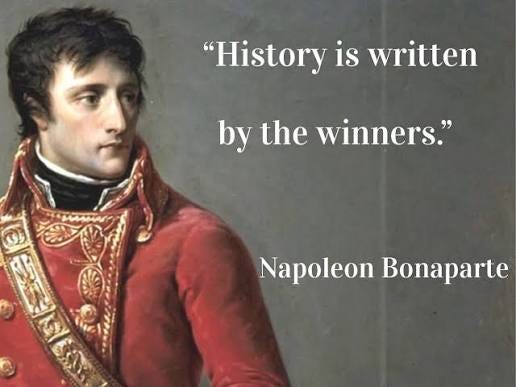
The seventh rule of the ethics of means and ends is that generally success or failure is a mighty determinant of ethics. The judgment of history leans heavily on the outcome of success or failure; it spells the difference between the traitor and the patriotic hero. There can be no such thing as a successful traitor, for if one succeeds he becomes a founding father.
Winners write history, or Stalin might put this as: you can always vilify the losers later once you’ve had them shot. There’s a lot of room to rewrite the story if you’re the only side left to tell it. This is the lesson that leads to the Long March Through The Institutions.
The eighth rule of the ethics of means and ends is that the morality of a means depends upon whether the means is being employed at a time of imminent defeat or imminent victory. The same means employed with victory seemingly assured may be defined as immoral, whereas if it had been used in desperate circumstances to avert defeat, the question of morality would never arise. In short, ethics are determined by whether one is losing or winning. From the beginning of time killing has always been regarded as justifiable if committed in self-defense.
Let us confront this principle with the most awful ethical question of modern times: did the United States have the right to use the atomic bomb at Hiroshima?
When we dropped the atomic bomb the United States was assured of victory. In the Pacific, Japan had suffered an unbroken succession of defeats. Now we were in Okinawa with an air base from which we could bomb the enemy around the clock. The Japanese air force was decimated, as was their navy. Victory had come in Europe, and the entire European air force, navy, and army were released for use in the Pacific. Russia was moving in for a cut of the spoils. Defeat for Japan was an absolute certainty and the only question was how and when the coup de grâce would be administered. For familiar reasons we dropped the bomb and triggered off as well a universal debate on the morality of the use of this means for the end of finishing the war.
I submit that if the atomic bomb had been developed shortly after Pearl Harbor when we stood defenseless; when most of our Pacific fleet was at the bottom of the sea; when the nation was fearful of invasion on the Pacific coast; when we were committed as well to the war in Europe, that then the use of the bomb at that time on Japan would have been universally heralded as a just retribution of hail, fire, and brimstone. Then the use of the bomb would have been hailed as proof that good inevitably triumphs over evil. The question of the ethics of the use of the bomb would never have arisen at that time and the character of the present debate would have been very different. Those who would disagree with this assertion have no memory of the state of the world at that time. They are either fools or liars or both.
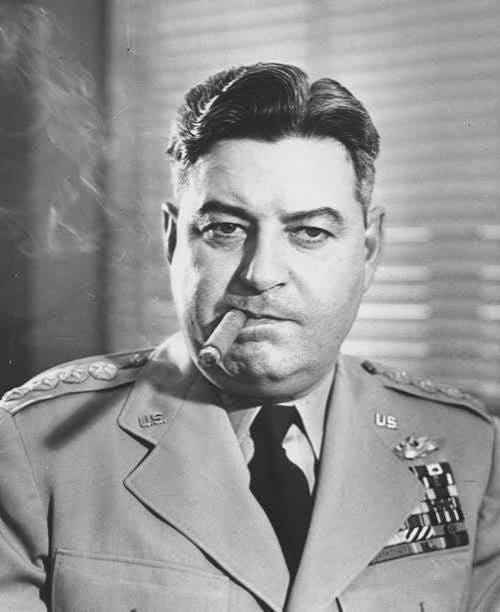
Alinsky probably doesn’t know Operation Downfall - nor would he cite it if he did; it would undermine his point; he’s probably also not particularly trying to advocate for letting LeMay burn down every city, village, and town in Japan with napalm, which appeared to be the default strategy otherwise (c.f. Malcolm Gladwell’s The Bomber Mafia). Again, as per his own moral compass, he just wants to posture and score points with his base.
But basically this message is: desperation loosens your restraints, someone backed into the corner will do whatever they need to and someone winning should not feel so urgently about it. (Whether this is true - or whether the side who is currently victorious is going to press to conclusion so as to keep the momentum and keep the tide from turning - may be a reflection of how Alinsky thinks, courtesy of Hollywood, rather than what, say, Patton might have advised.)
The ninth rule of the ethics of means and ends is that any effective means is automatically judged by the opposition as being unethical. One of our greatest revolutionary heroes was Francis Marion of South Carolina, who became immortalized in American history as “the Swamp Fox.” Marion was an outright revolutionary guerrilla. He and his men operated according to the traditions and with all of the tactics commonly associated with the present-day guerrillas. Cornwallis and the regular British Army found their plans and operations harried and disorganized by Marion’s guerrilla tactics. Infuriated by the effectiveness of his operations, and incapable of coping with them, the British denounced him as a criminal and charged that he did not engage in warfare “like a gentleman” or “a Christian.” He was subjected to an unremitting denunciation about his lack of ethics and morality for his use of guerrilla means to the end of winning the Revolution.
This again should be no surprise. Your enemies will always claim you are the villain.
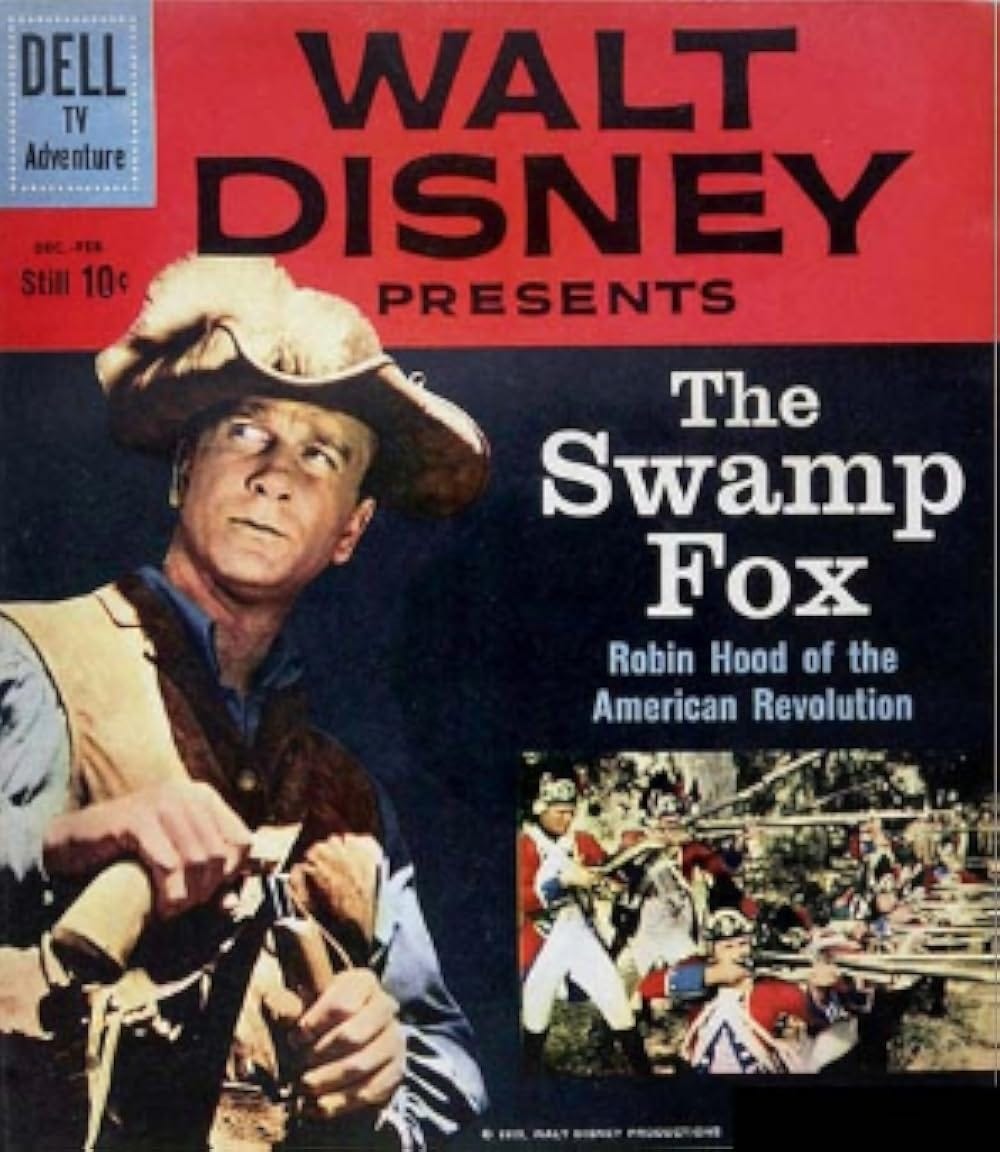
Remember, if you do really well, Walt Disney will immortalize you as the hero.
The tenth rule of the ethics of means and ends is that you do what you can with what you have and clothe it with moral garments. In the field of action, the first question that arises in the determination of means to be employed for particular ends is what means are available. This requires an assessment of whatever strengths or resources are present and can be used. It involves sifting the multiple factors which combine in creating the circumstances at any given time, and an adjustment to the popular views and the popular climate. Questions such as how much time is necessary or available must be considered. Who, and how many, will support the action? Does the opposition possess the power to the degree that it can suspend or change the laws? Does its control of police power extend to the point where legal and orderly change is impossible? If weapons are needed, then are appropriate weapons available? Availability of means determines whether you will be underground or above ground; whether you will move quickly or slowly; whether you will move for extensive changes or limited adjustments; whether you will move by passive resistance or active resistance; or whether you will move at all. The absence of any means might drive one to martyrdom in the hope that this would be a catalyst, starting a chain reaction that would culminate in a mass movement. Here a simple ethical statement is used as a means to power.
A naked illustration of this point is to be found in Trotsky’s summary of Lenin’s famous April Theses, issued shortly after Lenin’s return from exile. Lenin pointed out: “The task of the Bolsheviks is to overthrow the Imperialist Government. But this government rests upon the support of the Social Revolutionaries and Mensheviks, who in turn are supported by the trustfulness of the masses of people. We are in the minority. In these circumstances there can be no talk of violence on our side.” The essence of Lenin’s speeches during this period was “They have the guns and therefore we are for peace and for reformation through the ballot. When we have the guns then it will be through the bullet.” And it was.
Mahatma Gandhi and his use of passive resistance in India presents a striking example of the selection of means. Here, too, we see the inevitable alchemy of time working upon moral equivalents as a consequence of the changing circumstances and positions of the Have-Nots to the Haves, with the natural shift of goals from getting to keeping.
Gandhi is viewed by the world as the epitome of the highest moral behavior with respect to means and ends. We can assume that there are those who would believe that if Gandhi had lived, there would never have been an invasion of Goa or any other armed invasion. Similarly, the politically naive would have regarded it as unbelievable that that great apostle of nonviolence, Nehru, would ever have countenanced the invasion of Goa, for it was Nehru who stated in 1955: “What are the basic elements of our policy in regard to Goa? First, there must be peaceful methods. This is essential unless we give up the roots of all our policies and all our behavior... We rule out nonpeaceful methods entirely.” He was a man committed to nonviolence and ostensibly to the love of mankind, including his enemies. His end was the independence of India from foreign domination, and his means was that of passive resistance. History, and religious and moral opinion, have so enshrined Gandhi in this sacred matrix that in many quarters it is blasphemous to question whether this entire procedure of passive resistance was not simply the only intelligent, realistic, expedient program which Gandhi had at his disposal; and that the “morality” which surrounded this policy of passive resistance was to a large degree a rationale to cloak a pragmatic program with a desired and essential moral cover.
Let us examine this case. First, Gandhi, like any other leader in the field of social action, was compelled to examine the means at hand. If he had had guns he might well have used them in an armed revolution against the British which would have been in keeping with the traditions of revolutions for freedom through force. Gandhi did not have the guns, and if he had had the guns he would not have had the people to use the guns. Gandhi records in his Autobiography his astonishment at the passivity and submissiveness of his people in not retaliating or even wanting revenge against the British: “As I proceeded further and further with my inquiry into the atrocities that had been committed on the people, I came across tales of Government’s tyranny and the arbitrary despotism of its officers such as I was hardly prepared for, and they filled me with deep pain. What surprised me then, and what still continues to fill me with surprise, was the fact that a province that had furnished the largest number of soldiers to the British Government during the war, should have taken all these brutal excesses lying down.”
Gandhi and his associates repeatedly deplored the inability of their people to give organized, effective, violent resistance against injustice and tyranny. His own experience was corroborated by an unbroken series of reiterations from all the leaders of India—that India could not practice physical warfare against her enemies. Many reasons were given, including weakness, lack of arms, having been beaten into submission, and other arguments of a similar nature. Interviewed by Norman Cousins in 1961. Pandit Jawaharlal Nehru described the Hindus of those days as “A demoralized, timid, and hopeless mass bullied and crushed by every dominant interest and incapable of resistance.”
Faced with this situation we revert for the moment to Gandhi’s assessment and review of the means available to him. It has been stated that if he had had the guns he might have used them; this statement is based on the Declaration of Independence of Mahatma Gandhi issued on January 26, 1930, where he discussed “the fourfold disaster to our country.” His fourth indictment against the British reads: “Spiritually, compulsory disarmament has made us unmanly, and the presence of an alien army of occupation, employed with deadly effect to crush in us the spirit of resistance, has made us think we cannot look after ourselves or put up a defense against foreign aggression, or even defend our homes and families . . .” These words more than suggest that if Gandhi had had the weapons for violent resistance and the people to use them this means would not have been so unreservedly rejected as the world would like to think.
On the same point, we might note that once India had secured independence, when Nehru was faced with a dispute with Pakistan over Kashmir, he did not hesitate to use armed force. Now the power arrangements had changed. India had the guns and the trained army to use these weapons.{footnote 2} Any suggestion that Gandhi would not have approved the use of violence is negated by Nehru’s own statement in that 1961 interview: “It was a terrible time. When the news reached me about Kashmir I knew I would have to act at once—with force. Yet I was greatly troubled in mind and spirit because I knew we might have to face a war—so soon after having achieved our independence through a philosophy of nonviolence. It was horrible to think of. Yet I acted. Gandhi said nothing to indicate his disapproval. It was a great relief, I must say. If Gandhi, the vigorous nonviolent, didn’t demur, it made my job a lot easier. This strengthened my view that Gandhi could be adaptable.”
Confronted with the issue of what means he could employ against the British, we come to the other criteria previously mentioned; that the kind of means selected and how they can be used is significantly dependent upon the face of the enemy, or the character of his opposition. Gandhi’s opposition not only made the effective use of passive resistance possible but practically invited it. His enemy was a British administration characterized by an old, aristocratic, liberal tradition, one which granted a good deal of freedom to its colonials and which always had operated on a pattern of using, absorbing, seducing, or destroying, through flattery or corruption, the revolutionary leaders who arose from the colonial ranks. This was the kind of opposition that would have tolerated and ultimately capitulated before the tactic of passive resistance.
Gandhi’s passive resistance would never have had a chance against a totalitarian state such as that of the Nazis It is dubious whether under those circumstances the idea of passive resistance would even have occurred to Gandhi It has been pointed out that Gandhi, who was born in 1869, never saw or understood totalitarianism and defined his opposition completely in terms of the character of the British government and what it represented. George Orwell, in his essay Reflection on Gandhi, made some pertinent observations on this point: “... He believed in ‘arousing the world,’ which is only possible if the world gets a chance to hear what you are doing. It is difficult to see how Gandhi’s methods could be applied in a country where opponents of the regime disappear in the middle of the night and are never heard of again. Without a free press and the right of assembly it is impossible, not merely to appeal to outside opinion, but to bring a mass movement into being, or even to make your intentions known to your adversary.”
From a pragmatic point of view, passive resistance was not only possible, but was the most effective means that could have been selected for the end of ridding India of British control. In organizing, the major negative in the situation has to be converted into the leading positive. In short, knowing that one could not expect violent action from this large and torpid mass, Gandhi organized the inertia: he gave it a goal so that it became purposeful. Their wide familiarity with Dharma made passive resistance no stranger to the Hindustani. To oversimplify, what Gandhi did was to say, “Look, you are all sitting there anyway—so instead of sitting there, why don’t you sit over here and while you’re sitting, say Independence Now!’”
This raises another question about the morality of means and ends. We have already noted that in essence, mankind divides itself into three groups; the Have-Nots, the Have-a-Little, Want-Mores, and the Haves. The purpose of the Haves is to keep what they have. Therefore, the Haves want to maintain the status quo and the Have-Nots to change it. The Haves develop their own morality to justify their means of repression and all other means employed to maintain the status quo. The Haves usually establish laws and judges devoted to maintaining the status quo; since any effective means of changing the status quo are usually illegal and/or unethical in the eyes of the establishment, Have-Nots, from the beginning of time, have been compelled to appeal to “a law higher than man-made law.” Then when the Have-Nots achieve success and become the Haves, they are in the position of trying to keep what they have and their morality shifts with their change of location in the power pattern.
Eight months after securing independence, the Indian National Congress outlawed passive resistance and made it a crime. It was one thing for them to use the means of passive resistance against the previous Haves, but now in power they were going to ensure that this means would not be used against them! No longer as Have-Nots were they appealing to laws higher than man-made law. Now that they were making the laws, they were on the side of manmade laws! Hunger strikes—used so effectively in the revolution—were viewed differently now too. Nehru, in the interview mentioned above, said: The government will not be influenced by hunger strikes ... To tell the truth I didn’t approve of fasting as a political weapon even when Gandhi practiced it.”
Again Sam Adams, the firebrand radical of the American Revolution, provides a clear example. Adams was foremost in proclaiming the right of revolution. However, following the success of the American Revolution it was the same Sam Adams who was foremost in demanding the execution of those Americans who participated in Shays’ Rebellion, charging that no one had a right to engage in revolution against us!
Moral rationalization is indispensable at all times of action whether to justify the selection or the use of ends or means. Machiavelli’s blindness to the necessity for moral clothing to all acts and motives—he said “politics has no relation to morals”—was his major weakness.
All great leaders, including Churchill, Gandhi, Lincoln, and Jefferson, always invoked “moral principles” to cover naked self-interest in the clothing of “freedom” “equality of mankind,” “a law higher than man-made law,” and so on. This even held under circumstances of national crises when it was universally assumed that the end justified any means. All effective actions require the passport of morality.
The examples are everywhere. In the United States the rise of the civil rights movement in the late 1950s was marked by the use of passive resistance in the South against segregation. Violence in the South would have been suicidal; political pressure was then impossible; the only recourse was economic pressure with a few fringe activities. Legally blocked by state laws, hostile police and courts, they were compelled like all Have-Nots from time immemorial to appeal to “a law higher than man-made law.” In his Social Contract, Rousseau noted the obvious, that “Law is a very good thing for men with property and a very bad thing for men without property.” Passive resistance remained one of the few means available to anti-segregationist forces until they had secured the voting franchise in fact. Furthermore, passive resistance was also a good defensive tactic since it curtailed the opportunities for use of the power resources of the status quo for forcible repression. Passive resistance was chosen for the same pragmatic reason that all tactics are selected. But it assumes the necessary moral and religious adornments.
However, when passive resistance becomes massive and threatening it gives birth to violence. Southern Negroes have no tradition of Dharma, and are close enough to their Northern compatriots so that contrasting conditions between the North and the South are a visible as well as a constant spur. Add to this the fact that the Southern poor whites do not operate by British tradition but reflect generations of violence; the future does not argue for making a special religion of nonviolence. It will be remembered for what it was, the best tactic for its time and place.
As more effective means become available, the Negro civil rights movement will divest itself of these decorations and substitute a new moral philosophy in keeping with its new means and opportunities. The explanation will be, as it always has been, Times have changed.” This is happening today.
This is really Alinsky’s only rule. Figure out whatever you can do with what resources you have, do that, and then tell whatever justifications you need to to make it look moral and your opponents look immoral.
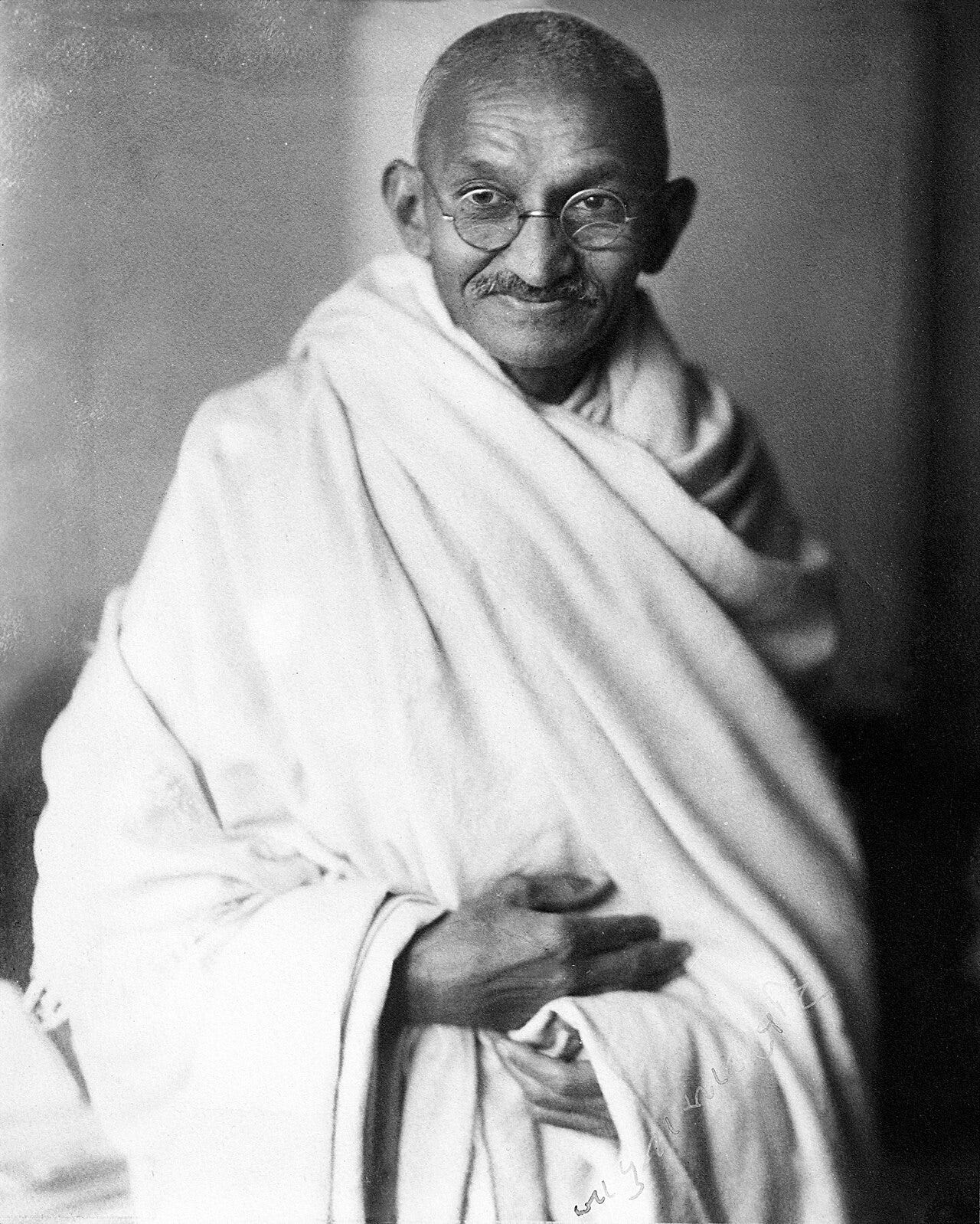
Alinsky’s prediction that the civil rights movement would continue to evolve was certainly accurate - I’m not sure he would have predicted where it went after the 1970s, but this was one area he had a good pulse on at the time.
The eleventh rule of the ethics of means and ends is that goals must be phrased in general terms like “Liberty, Equality, Fraternity,” “Of the Common Welfare,” “Pursuit of Happiness,” or “Bread and Peace.” Whitman put it: “The goal once named cannot be countermanded.” It has been previously noted that the wise man of action knows that frequently in the stream of action of means towards ends, whole new and unexpected ends are among the major results of the action. From a Civil War fought as a means to preserve the Union came the end of slavery.
In this connection, it must be remembered that history is made up of actions in which one end results in other ends. Repeatedly, scientific discoveries have resulted from experimental research committed to ends or objectives that have little relationship with the discoveries. Work on a seemingly minor practical program has resulted in feedbacks of major creative basic ideas. J. C. Flugel notes, in Man, Morals and Society, that”... In psychology, too, we have no right to be astonished if, while dealing with a means (e.g., the cure of a neurotic symptom, the discovery of more efficient ways of learning, or the relief of industrial fatigue) we find that we have modified our attitude toward the end (acquired some new insight into the nature of mental health, the role of education, or the place of work in human life).”
The mental shadow boxing on the subject of means and ends is typical of those who are the observers and not the actors in the battlefields of life. In The Yogi and the Commissar, Koestler begins with the basic fallacy of an arbitrary demarcation between expediency and morality; between the Yogi for whom the end never justifies the means and the Commissar for whom the end always justifies the means. Koestler attempts to extricate himself from this self-constructed strait jacket by proposing that the end justifies the means only within narrow limits. Here Koestler, even in an academic confrontation with action, was compelled to take the first step in the course of compromise on the road to action and power. How “narrow” the limits and who defines the “narrow” limits opens the door to the premises discussed here. The kind of personal safety and security sought by the advocates of the sanctity of means and ends lies only in the womb of Yogism or the monastery, and even there it is darkened by the repudiation of that moral principle that they are their brothers’ keepers.
Bertrand Russell, in his Human Society in Ethics and Politics, observed that “Morality is so much concerned with means that it seems almost immoral to consider anything solely in relation to its intrinsic worth. But obviously nothing has any value as a means unless that to which it is a means has value on its own account. It follows that intrinsic value is logically prior to value as means.”
The organizer, the revolutionist, the activist or call him what you will, who is committed to a free and open society is in that commitment anchored to a complex of high values. These values include the basic morals of all organized religions; their base is the preciousness of human life. These values include freedom, equality, justice, peace, the right to dissent; the values that were the banners of hope and yearning of all revolutions of men, whether the French Revolution’s “Liberty, Fraternity, Equality,” the Russians’ “Bread and Peace,” the brave Spanish people’s “Better to die on your feet than to live on your knees,” or our Revolution’s “No Taxation Without Representation.” They include the values in our own Bill of Rights. If a state voted for school segregation or a community organization voted to keep blacks out, and claimed justification by virtue of the “democratic process,” then this violation of the value of equality would have converted democracy into a prostitute. Democracy is not an end; it is the best political means available toward the achievement of these values.
Means and ends are so qualitatively interrelated that the true question has never been the proverbial one, “Does the End justify the Means?” but always has been “Does this particular end justify this particular means?”
Phrase your goals in some general terms, so that you can move the goalposts as you need to - having concrete goals runs the risks that you might achieve them and then your cause could dissipate.
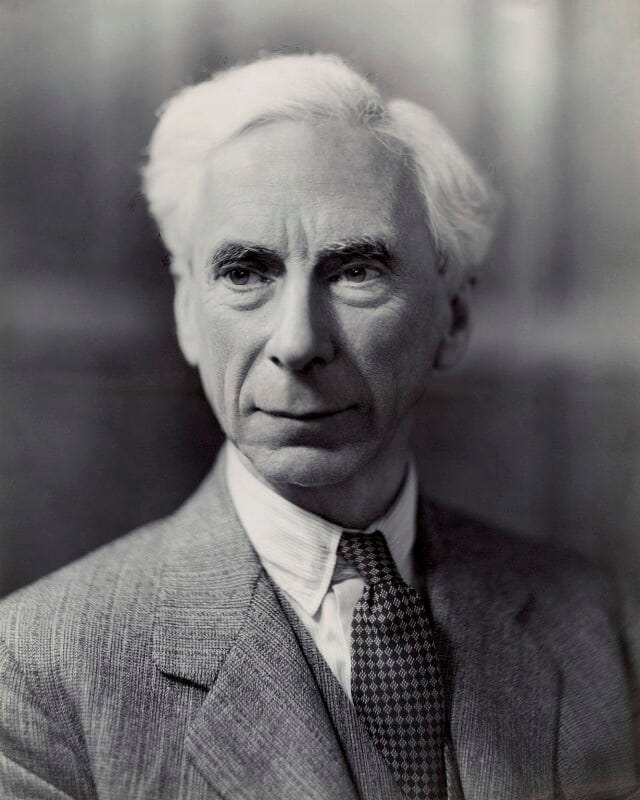
Alinsky then finally gets on to the Rules of Power in the section labeled Tactics, which is basically his advice about how to do anything rather than the rest of the navel-gazing. Not surprisingly, this is the best-written part part of the book and the most approachable.
Tactics, as far as Alinsky defines it, means doing what you can with what you have.
In the world of give and take, tactics is the art of how to take and how to give. Here our concern is with the tactic of taking; how the Have-Nots can take power away from the Haves.
It’s perhaps not going to surprise you that Alinsky never covers “how to give” in this or any of his other writings. Curious, maybe: you’d think that if you’re trying to organize the underclass, you might want some idea how to run a soup kitchen, free community clinic / dentist, homeless shelter, clothing closet/thrift store, local employment organization or other organization point for volunteering, tutoring, and mutual aid. But that’s not the sort of thing he wanted to do - it wasn’t his road to power.
For an elementary illustration of tactics, take parts of your face as the point of reference; your eyes, your ears, and your nose. First the eyes; if you have organized a vast, mass-based people’s organization, you can parade it visibly before the enemy and openly show your power. Second the ears; if your organization is small in numbers, then do what Gideon did: conceal the members in the dark but raise a din and clamor that will make the listener believe that your organization numbers many more than it does. Third, the nose; if your organization is too tiny even for noise, stink up the place.
“Stink up the place” is instantly going to remind anyone who has read this book of a particularly memorable scene from page 139 or so, depending on your edition. If you haven’t - carry on, we’ll get to it in a second. Suffice it to say:

On to the core rules:
Power is not only what you have, but what the enemy thinks you have. Basically this amounts to “leverage perception to amplify your influence, even if your actual power is limited,” or more concisely “know how to bluff.” If this sounds like a completely obvious truism - well, keep in mind, this is basically a self-help book, they tend to thrive on telling you things you really already know.
Never go outside the expertise of your people. (Alinsky goes on to say “When an action or tactic is outside the experience of the people, the result is confusion, fear, and retreat.”) Stick to strategies and actions your group can confidently execute to maintain credibility and momentum - or at very least, know what your team can actually do (and fill gaps, if you need skills you don’t have. Think of building the Ocean’s Eleven team.)
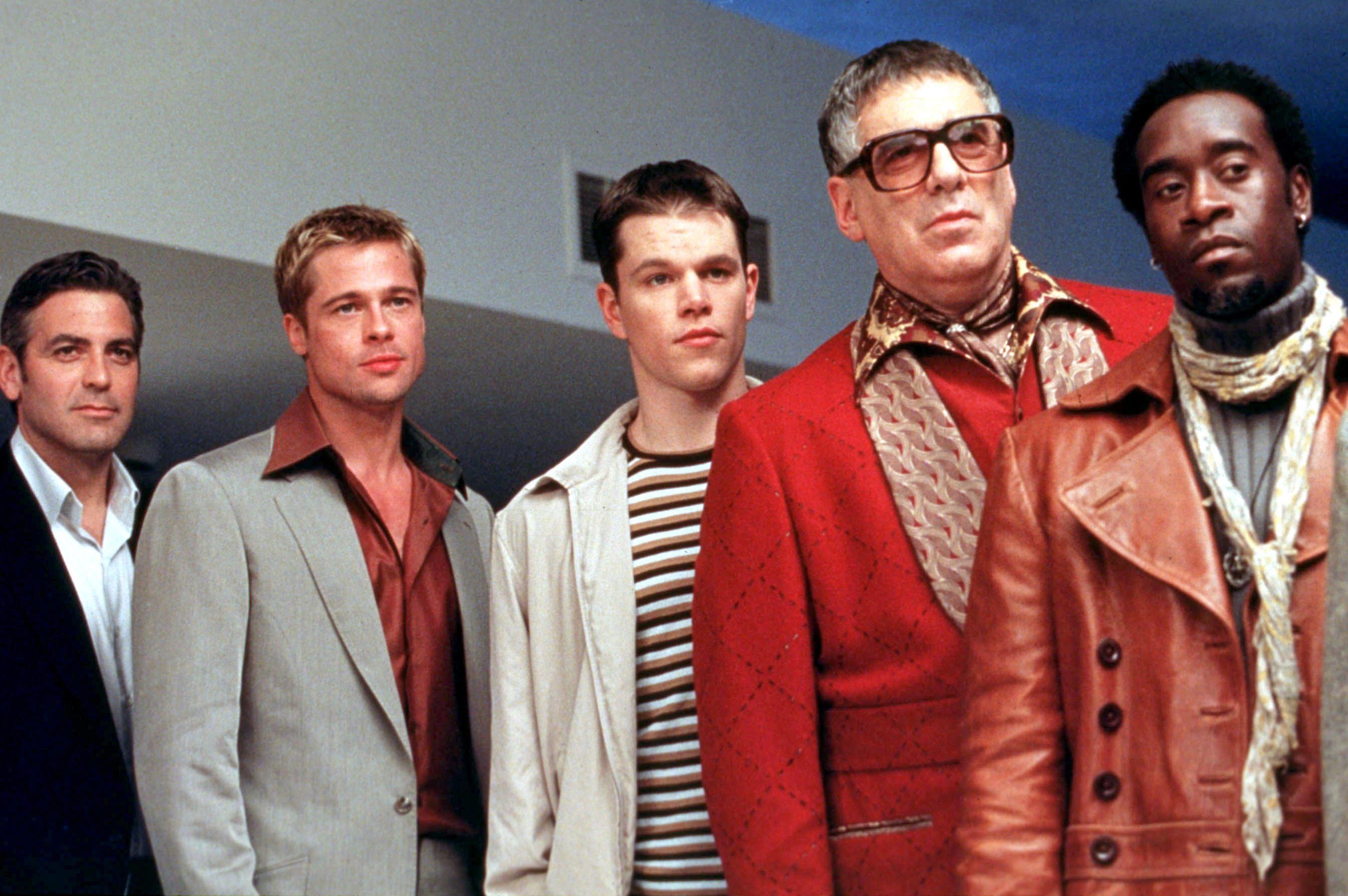
Whenever possible, go outside the expertise of the enemy. This can literally mean to force opponents into unfamiliar territory where they’re less effective, or metaphorically - just to tie them up in a fashion that they’re not prepared to deal with. Nobody’s good at everything, force them to play at a disadvantage.
Make the enemy live up to its own book of rules. Hold opponents accountable to their stated principles, exposing hypocrisy or contradictions. (Alinsky literally says “You can kill them with this, for they can no more obey their own rules than the Christian church can live up to Christianity.” He neglects to caution the organizer to watch out for other people doing this to them, however - it often is the source of a coup within their own organization.)
Ridicule is man’s most potent weapon. Use humor and mockery to undermine opponents, as it’s hard to counter and can demoralize. (Alinsky puts it concisely: “It is almost impossible to counterattack ridicule. Also it infuriates the opposition, who then react to your advantage.”)
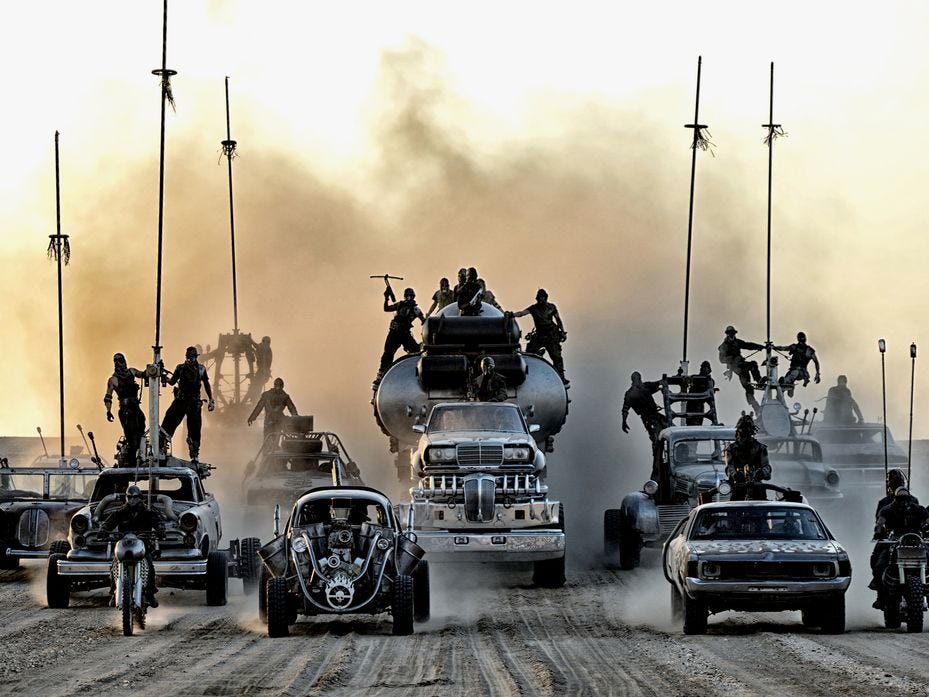
A good tactic is one your people enjoy. Choose actions that energize and motivate your group to keep engagement high. “If your people are not having a ball doing it, there is something very wrong with the tactic.” (Surely this can’t be exclusively his rule of engagement - you can’t have a group where people only do the fun stuff, sooner or later, someone needs to wash the dishes and do the laundry, but I suppose if you’re basically running this like a Mad Max raiding party and hygiene takes a back seat to cocaine, as the 1970s radical movement seems to have shown us, then Alinsky - and widespread gonorrhea - starts to sound a lot more plausible.)
A tactic that drags on too long becomes a drag. Avoid repetitive strategies that lose impact or bore supporters. Alinsky puts it like this “Man can sustain militant interest in any issue for only a limited time, after which it becomes a ritualistic commitment, like going to church on Sunday mornings. New issues and crises are always developing, and one’s reaction becomes, “Well, my heart bleeds for those people and I’m all for the boycott, but after all there are other important things in life”—and there it goes.”
I think this is actually much simpler - as did the perpetually-repenting Hell’s Angel hanging about - one of my pastor’s pet projects - who saw me reading this book at age 10 and told me “that’s fulla shit. What the fool means is: Ya keep doin the same thing, ya gonna get caught. Sooner or later even the cops wise up.” (Turns out - the bikers and the revolutionary radicals didn’t like each other. Who knew? At age 10, you could have fooled me, they seemed all to eager to wander off and bang each other when no one was looking, and the cops didn’t like either of them, and the Gypsies formed their own group separate from all of them but everyone partied together, even Johnny Law when he was off duty, so whatever the hell the rules were I didn’t know. But I knew better than to play cards for money. That’s a different story, though.)
Keep the pressure on. “with different tactics and actions, and utilize all events of the period for your purpose.” Maintain constant, varied actions to prevent the opposition from regrouping or adapting. This one was easy and everyone already knew it when asked - even my basketball coach came back with “keep ‘em sweating.”
The threat is usually more terrifying than the thing itself. The fear of what might happen can be more effective than the action itself. People will psych themselves out if you give them the chance, especially if they have any sense of imagination or if you give them some ideas as to what to worry about and the freedom to run with it.
The major premise for tactics is the development of operations that will maintain a constant pressure upon the opposition. “It is this unceasing pressure that results in the reactions from the opposition that are essential for the success of the campaign. It should be remembered not only that the action is in the reaction but that action is itself the consequence of reaction and of reaction to the reaction, ad infinitum. The pressure produces the reaction, and constant pressure sustains action.” Organize actions to sustain long-term momentum and keep opponents off balance. If you feel like this is basically restating “keep the pressure on”, you’re kind of right - it basically says “make sure your system reinforces that” rather than it just being a volunteer effort. How that works with the “let everyone do the fun bits” part is a little bit difficult, potentially - you have to find people for whom building the system is fun, and if all you have is goons, you need to recruit new smart people - and then convince your current people to follow the new leaders, which might be hard. (This was historically Alinsky’s difficulty - he wanted to come in and take over the Black Panthers and similar racial power groups, who were quite happy to take his advice but had no intention of ceding leadership to someone who wasn’t Their Own Brothers.)
If you push a negative hard enough, it will push through and become a positive. Persistent pressure on an issue can shift public perception in your favor. Alinsky cites Gandhi and passive resistance. This could use some clarity, so here goes: this is basically the concept of jujitsu; if your opponent is exploiting your weakness you should call this out for public support because it makes them look like they’re overreacting and being a bully. You need to be willing to absorb the short-term costs of the weakness (arrests, bad press, setbacks) while waiting for public opinion to flip - and it only works if others are going to come to your aid eventually - so you need to have some allies or at least people who will benefit from tearing down your mutual enemy. Alinsky uses it in the context of Gandhi and passive resistance, or likewise peaceful strikes and picketing that provokes violent or otherwise disproportionate countermeasures from employers or police - these days, the canonical example is probably Palestine and Israel, where nobody particularly denies that Hamas massacres of Israeli civilians brought a Israeli military response against the attackers in Gaza, but the drumbeat of the Left’s engine has been to constantly blame Netanyahu for genocide. This seems like a tactic that perhaps works as long as you have enough of the media and political voices on your side; I’m not sure how effective it is otherwise.

The price of a successful attack is a constructive alternative. Offer a solution after exposing a problem to maintain credibility and momentum. Alinsky is pretty clear here, you can’t just smash the state: “You cannot risk being trapped by the enemy in his sudden agreement with your demand and saying “You’re right—we don’t know what to do about this issue. Now you tell us.”“
Pick the target, freeze it, personalize it, and polarize it. Focus on a specific person or entity as the face of the problem to simplify and intensify the conflict. It’s always about giving your faction - and the unaligned, and the media - someone to hate.
“It should be remembered that you can threaten the enemy and get away with it. You can insult and annoy him, but the one thing that is unforgivable and that is certain to get him to react is to laugh at him. This causes an irrational anger.”

Alinsky suggests, for instance, that his group might buy a hundred tickets to the Rochester symphony, and deploy a hundred black attendees who had previously had a three-hour pre-concert dinner consisting of nothing but baked beans. He points out that while there are laws against deploying stink bombs or similar pyrotechnics, there’s nothing that the police department or the ushers could do about this other than wince. This is, incidentally, the bit that seems to stick in people’s head most about this book - I’m not sure if it’s the the fact that it sounds like the sort of plan Beavis and Butthead would come up with or just the acknowledgement that this ia a pretty effective subversion of nonviolent protest into something obnoxious but compliant.

(His other suggestions are all basically racism-fear coded, like “bus in three thousand blacks dressed in their Sunday best suits and dresses and send them all to the same department store where they spend the day milling about window shopping, inquiring for details about products, putting things on layaway, ordering cash-on-delivery, and generally very much changing the clientele and color of the store - thus scaring off the current customer base”.)
Seems like, fast forward a few decades and you have flash mobs of shoplifters being bussed in to cause mayhem in California.

“Remember the rule—the threat is often more effective than the tactic itself, but only if you are so organized that the establishment knows not only that you have the power to execute the tactic but that you definitely will. You can’t do much bluffing in this game; if you’re ever caught bluffing, forget about ever using threats in the future. On that point you’re dead.”
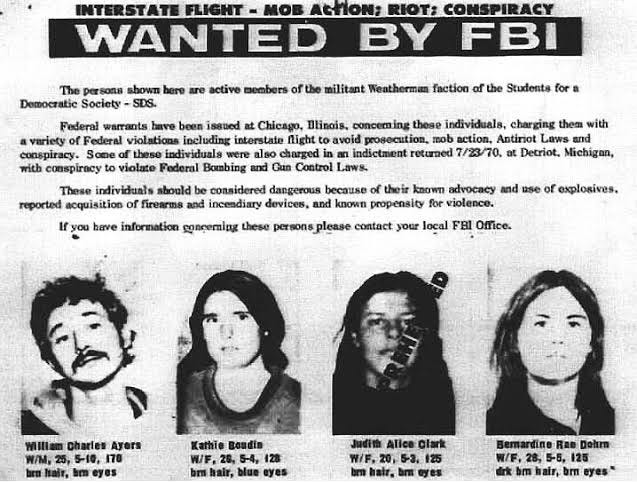
This isn’t even slightly true, of course, and he knows it - the threats from the Weathermen and other radical organizations of Alinsky’s time had to be taken seriously even when many of them were fake, because the ones that were real were quite hazardous. Enough of them have to be real to lend credibility - but a great deal of “crying wolf” took place, and still does.
“Let us take one of the negative stereotypes that so many whites have of blacks: that blacks like to sit around eating watermelon. Suppose that 3,000 blacks suddenly descended into the downtown sections of any city, each armed with and munching a huge piece of watermelon. This spectacle would be so far outside the experience of the whites that they would be unnerved and disorganized. In alarm over what the blacks were up to, the establishment would probably react to the advantage of the blacks. Furthermore, the whites would recognize at last the absurdity of their stereotype of black habits. Whites would squirm in embarrassment, knowing that they were being ridiculed. That would be the end of the black watermelon stereotype. I think that this tactic would bring the administration to contact black leadership and ask what their demands were even if no demands had been made. Here again is a case of doing what you can with what you’ve got.”
These days that might be performance art, or just a flash mob, or a PR campaign for a new Childish Gambino video. But more likely just someone’s AI generated slop for a watermelon zombie movie - be right back, submitting a screenplay (totally kidding).

Alinsky also talks about the merits of doing a proxy fight for board seats in a corporation, and acknowledges that though you’re not likely to actually win that it can be a good bit of theatrics. For my tastes he spends entirely too much time on this - I’m not sure if what he’s written here is just obsolete, or if this is just something I know more about than he does, but you could safely skim or omit this section. You’re never going to do more than annoy yourself this way, unless you have the budget to be a corporate raider (and if so, you want to take advice from Michael Milken and Ivan Boesky, or more charitably / theoretically, maybe Hyman Minsky). Alinsky basically just wanted to use proxies as an admission ticket for a protest meeting - not as a way to actually change the company structure in any useful fashion; the junk-bond raiders by comparison and their “greenmail” threats both actually drove real change through their threats and extracted substantial financial concessions. But you should treat them as actual claims on control of the firm - and not just the license to grandstand that Alinsky saw them as.
All in all - this book is very much a product of its time. It was written in a time of urban unrest, with anti-war protest far more prominent than No Kings or the anti-ICE movements today (and for good reason: Americans did not like the idea of dying for a war in Vietnam), and there were still organizations in America that prided themselves on remaining unbiased and engaged on a civic level. This has mostly changed: decades of polarization, institutional distrust, and the rise of professional advocacy organizations, combined with the increasing editorialization of journalism rather than investigative reporting and the move of civic organizations to the NGO and VOLAG - government-funded volunteer agency - orbit (eg the controversy around Lutheran Social Services of Minnesota or Catholic Charities / US Conference of Catholic Bishops) - there’s a lot less of the community-organizer aspect and a lot more machine-politics, generally outright-sponsored. But the core tactical psychology - focused on how to create and exploit conflict, force reactions, personalize the target, and treat power as relational, perceptual, and transactional… well, that’s timeless. Rules For Radicals was written as a manual for community organizers and it isn’t as useful for that today, because that role isn’t nearly the same thing as it was (and isn’t left to the Alinskys of the world) - but it’s still a good framework for thinking about power outside (and in some cases inside) formal institutions.